Kōro and Jōkōro: Scented Smoke at Shrine and Temple
A Japanese incense burner is usually called a kōro (香炉), a lidded vessel that holds ash, charcoal, and fragrant wood or incense. At a Buddhist temple you may meet a chest-high jōkōro (常香炉) where visitors wave smoke over their heads before entering the hall. At a Shinto shrine the same bronze silhouette sometimes sits on a stone ledge near the temizuya, a legacy of centuries when kami worship and Buddhist ritual shared courtyard space. The object is practical: it keeps fire contained and lifts scent into the air as an offering.
Kōro, jōkōro, and the ash bed inside
Kōro is the general word for incense burner. Shape and size follow use. A small hand kōro might sit on an altar with a single stick or pellet of resin. A tripod bronze kōro warms aromatic wood on a bed of ash for kōdō, the incense-comparing game. A jōkōro is the large outdoor type, often cast iron or ceramic, placed before a main hall so crowds can bathe in smoke for purification.
Most kōro share the same logic. Ash fills the bowl to insulate heat. Charcoal or a smoldering chip of agarwood (jinkō) rests on the ash, sometimes on a thin mica plate so the wood scents without flaming. A pierced lid lets smoke rise while sparks stay inside. Handles or lugs allow lifting with cords when the bronze is hot. Wildform's pack model reads as a compact courtyard kōro: wide belly, short legs, and a lid you can place beside a stone lantern on the sandō.
From Buddhist altars to court perfume
Incense entered Japan with Buddhism in the 6th century CE. World History Encyclopedia dates the official arrival to 538 or 552 CE from Korea, and Prince Shōtoku's later patronage spread temples that burned incense in sutra rites. Britannica notes that in China incense honored ancestors and household gods, and that the practice was later incorporated into Shinto ritual in Japan.
Court life in the Heian period (794–1185) turned scent into fashion. Aristocrats perfumed robes, fans, and rooms using powdered takimono blends and small kōro. The Tale of Genji treats fragrance as intimacy and status. Monasteries meanwhile kept incense as purification before image worship. The same bronze vessel could mark prayer in a hall or pleasure in a screened room, depending on who owned it.
Purification smoke at temples and syncretic shrines
Buddhism and Shinto coexisted for most of Japanese history. Ryōbu Shinto paired kami with Buddhist figures, and temple-shrine complexes shared precinct layouts. Large jōkōro therefore appear at famous Buddhist gates, where visitors cover themselves with smoke after rinsing at the chozuya. Some shrines with Buddhist pasts kept courtyard burners even after the Meiji government ordered formal separation in 1868.
Pure Shinto worship at a rural jinja more often centers on water, salt, rice, and sake at the haiden, with hand claps to address the kami. World History Encyclopedia describes temizuya cleansing and offerings at the saisenbako without requiring incense. When you place a kōro in a shrine scene, you signal a syncretic or urban precinct, or a festival day when extra offerings smoke on the altar. Pair it with a Jizo statue or a Hannya mask nearby and the courtyard reads as Buddhist-Shinto overlap rather than a bare forest shrine.
Akoda-kōro, bronze legs, and Edo merchant taste
Casters and lacquerers developed named forms. Akoda-kōro (阿古陀香炉) copies the lobed melon or pumpkin, usually six panels, with a reticulated metal lid. Edo workshops lined the wood with copper alloy and filled the belly with ash for safe burning. Bronze kōro for temples might carry dragon handles, phoenix lids, or family crests of donor daimyō.
By the 17th and 18th centuries, merchants and samurai households collected kōro for kōdō parties as well as for altars. Incense schools taught guests to identify rare woods blindfolded, using a small kikikōro heater passed hand to hand. Export wares in the Meiji era added porcelain kōro in Kakiemon palettes for European tables, far from religious use but proof of how central the silhouette had become in Japanese craft.
An Edo akoda kōro in the Met collection
Museum pieces show the craft at its most refined. The Metropolitan Museum of Art holds a melon-shaped Akoda Kōro with cranes, turtles, pine, and bamboo, dated to the 17th century Edo period. It stands 3 5/8 inches high with cover (9.2 cm) and 4 1/4 inches across (10.8 cm), lacquered wood with gold takamaki-e and hiramaki-e on a nashiji pear-skin ground. A copper alloy lining protected the wood from heat; ash inside kept incense smoldering beneath an openwork basket-weave lid.
Crane and tortoise motifs invoke longevity; pine and bamboo join them as auspicious emblems tied to Chinese immortals' isles, even without plum blossoms on this example. The object is domestic scale, meant for a tatami room or alcove, not a temple gate. It still teaches the parts your game model can simplify: lobed body, pierced cover, and legs that lift the fire off the shelf.
What survives when scent became an art
Historic kōro survive in temple treasuries, museum Asian art departments, and private kōdō schools that still pass heirloom burners to students. Dating relies on lacquer layers, casting seams, and patina on bronze feet. Many Edo pieces lack maker stamps; temple inventories or export labels supply context instead.
Scholars treat incense less as a single religion's tool than as a thread linking Buddhist offering, Shinto purity, court poetry, and later secular connoisseurship. Whether agarwood smolders on an altar or in a game, the kōro remains the constant vessel. In a game scene it adds motion and atmosphere: a thin smoke column at dawn rite or festival evening, marking sacred ground by scent as a torii marks it by form.
In your scene
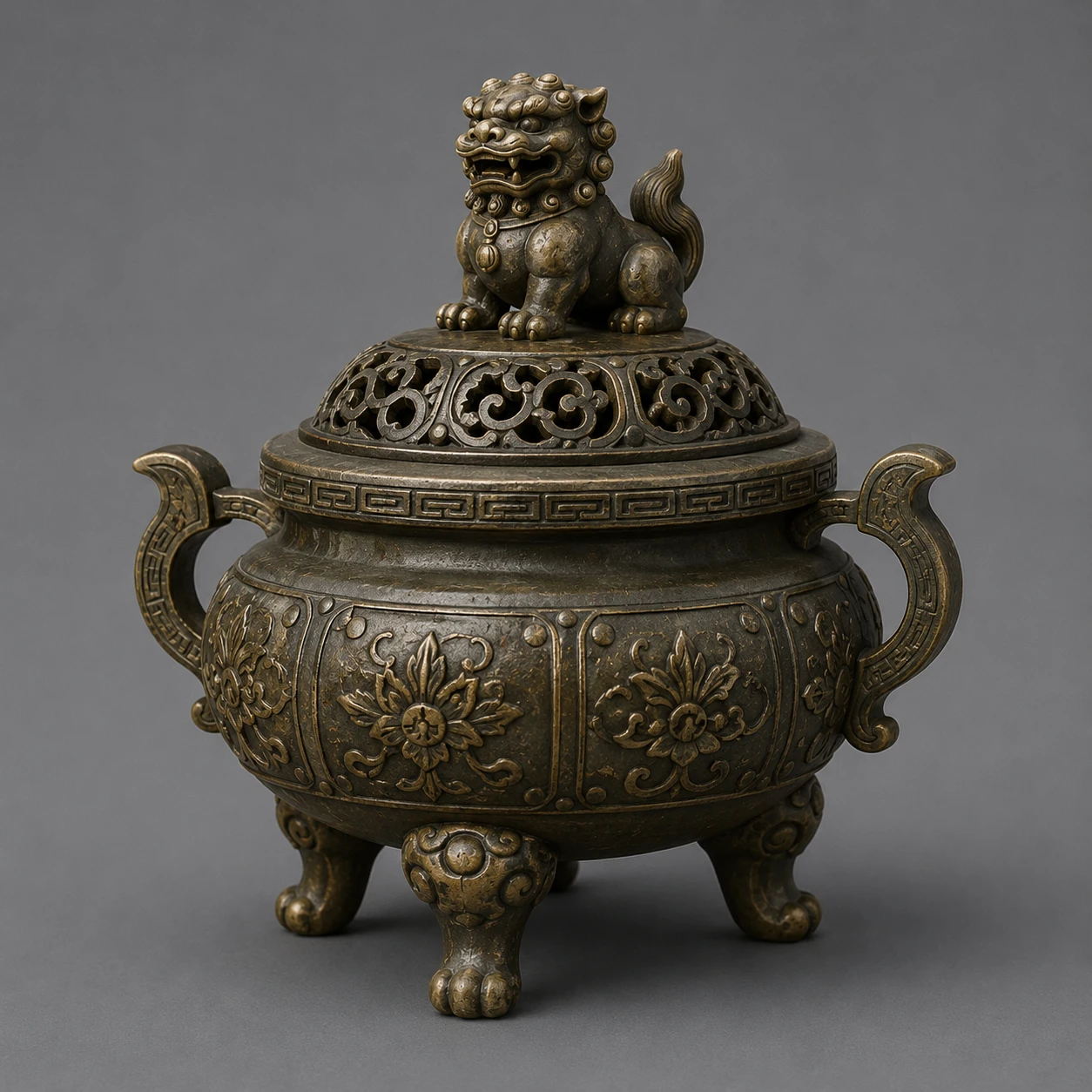
Place a bronze or lacquered kōro on a stone pad near the temizuya or before a subsidiary shrine building, with faint smoke rising at looped animation speed. Keep hand claps and the offering box as the main Shinto cues, and let incense suggest Buddhist syncretism or a festival extra. Our Shinto Shrine Relics pack includes an incense burner model scaled for courtyard props beside lanterns and bells.