What Is a Ritual Fan? Ōgi and Torimono in Shinto Kagura
A ritual fan in Japanese shrine life is usually an ōgi (扇), a folding fan or flat uchiwa carried as torimono (執物), a symbolic hand prop during sacred dance and offering. Miko shrine maidens open a painted sensu during kagura to mark rhythm, frame the body, and present a yorishiro, an object where the kami's attention can rest. The fan is not everyday cooling gear in that context. It is choreographic equipment tied to matsuri, the seasonal festivals that fill the kaguraden pavilion with music, bells, and movement.
Ōgi, sensu, and torimono at the shrine
Ōgi is the broad word for fan. Sensu (扇子) means the folding type with bamboo ribs and paper or silk leaves that collapse along a pivot. Uchiwa (団扇) is the rigid round paddle, common at summer festivals and folk dances. In formal Shinto kagura, sensu appear more often in miko dances, while priests in some regional rites use larger fans to purify space with gentle waving.
Torimono is the umbrella term for items held during ritual performance: sakaki sprigs, gohei wands, kagura suzu bell trees, dwarf bamboo, and fans. Each object is chosen for a repertoire, not as random stage dressing. Wildform's pack model reads as a compact folding fan with visible ribs, suited to a miko NPC beside a shrine bell or a rolled prayer scroll on a side table.
Kagura dance and the miko who carry the fan
Kagura is Shinto sacred music and dance offered to kami. Britannica divides later practice into mi-kagura at the imperial court, o-kagura at major shrines, and sato-kagura in local parishes. Dances retell myths, especially the episode where the goddess Amenouzume's performance coaxed the sun goddess Amaterasu from a cave, restoring light to the world.
Modern miko-kagura (巫女神楽) is a stylized descendant of older possession dances. Today shrine maidens in white kosode and red hakama perform set choreography during New Year rites, harvest festivals, and dedication ceremonies. They may hold a fan in one hand and kagura suzu bells in the other, opening and closing the sensu on fixed beats while circling the altar. The motion purifies the performance area and entertains the deity as myth prescribed.
Where fans meet bells, gohei, and the kaguraden
World History Encyclopedia lists the kaguraden among typical shrine buildings, a pavilion for ritual dance and music. Larger precincts stage full kagura there during matsuri; small shrines may dance before the haiden oratory instead. Fans rarely hang permanently like ema plaques. They are brought out with costumes, stored in the shrine office, and handled only by trained staff.
The fan complements sound. A visitor rings the suzu above the offering box; inside the pavilion a miko answers with bell trees and fan gestures that translate myth into movement. Gohei mark sacred borders at the torii; the fan marks sacred time inside the rite. Together they tell players this is performance for kami, not a secular folk fair, even when crowds gather to watch.
Gunbai, uchiwa, and what is not this prop
Naming trips newcomers. Gunbai or gunpai (軍配) is the lacquered war fan commanders and sumo referees use to signal authority. It is flat, stiff, and military in origin, not a miko dance sensu. Summer uchiwa printed with advertising belong to street festivals and Bon dances, which may occur near a shrine yet follow different rules than inner sanctuary kagura.
Noh theater adds another fan class. Chūkei (中啓) folding fans carry painted scenes matched to actor roles, including gods and august visitors. Shrine kagura borrowed court and temple aesthetics over centuries, so painted gold fans appear in both Noh and miko repertoires. When you dress a scene, choose folding ribs and ritual colors for miko; reserve the flat gunbai for a warlord camp or sumo ring unless you deliberately mix genres.
Chūkei deity fan in the Met collection
Museum fans show how artisans treated the object as a small painting surface. The Metropolitan Museum of Art holds a Chūkei Fan with Queen Mother of the West and King Mu of Zhou (obverse) and Plum Tree and Young Pines (reverse), from the first half of the 19th century Edo period. Medium: folding fan (chūkei); ink, color, gold, and gold leaf on paper; bamboo ribs and lacquer. Dimensions: 13 1/4 by 19 inches (33.7 by 48.3 cm).
The museum notes that this chūkei type is an important Noh accessory whose decoration varies by role; this example suits a deity part. One face shows the Queen Mother of the West with attendants and peaches of immortality; the reverse bears plum and young pine motifs. It is theater equipment, not a parish miko's everyday sensu, yet it demonstrates the gold-leaf paper, lacquered ribs, and narrative painting players expect on a high-rank ritual fan.
For game art, borrow the half-open arc, metallic leaf accents, and bamboo rib spacing rather than copying Noh iconography directly. A simpler white or red fan reads faster at courtyard scale.
Paper, ribs, and replacement cycles
Folding fans are fragile. Paper leaves tear in humid summers; lacquer stiffens on ribs after decades. Shrines replace festival fans on a schedule similar to gohei streamers, while heirloom fans for famous kagura troupes may be repaired by specialists. Cheap practice sensu use plain washi; formal performance fans may carry the shrine crest or seasonal plants tied to the kami.
Court culture once treated painted fans as gifts and poetry surfaces, which is why museums hold fan-shaped paintings remounted as scrolls. Shrine dance kept the functional hinge. Animating a fan prop works best with a slow open during the first bell phrase and a snap shut at the bow, matching the deliberate tempo of kagura rather than combat flourishes.
In your scene
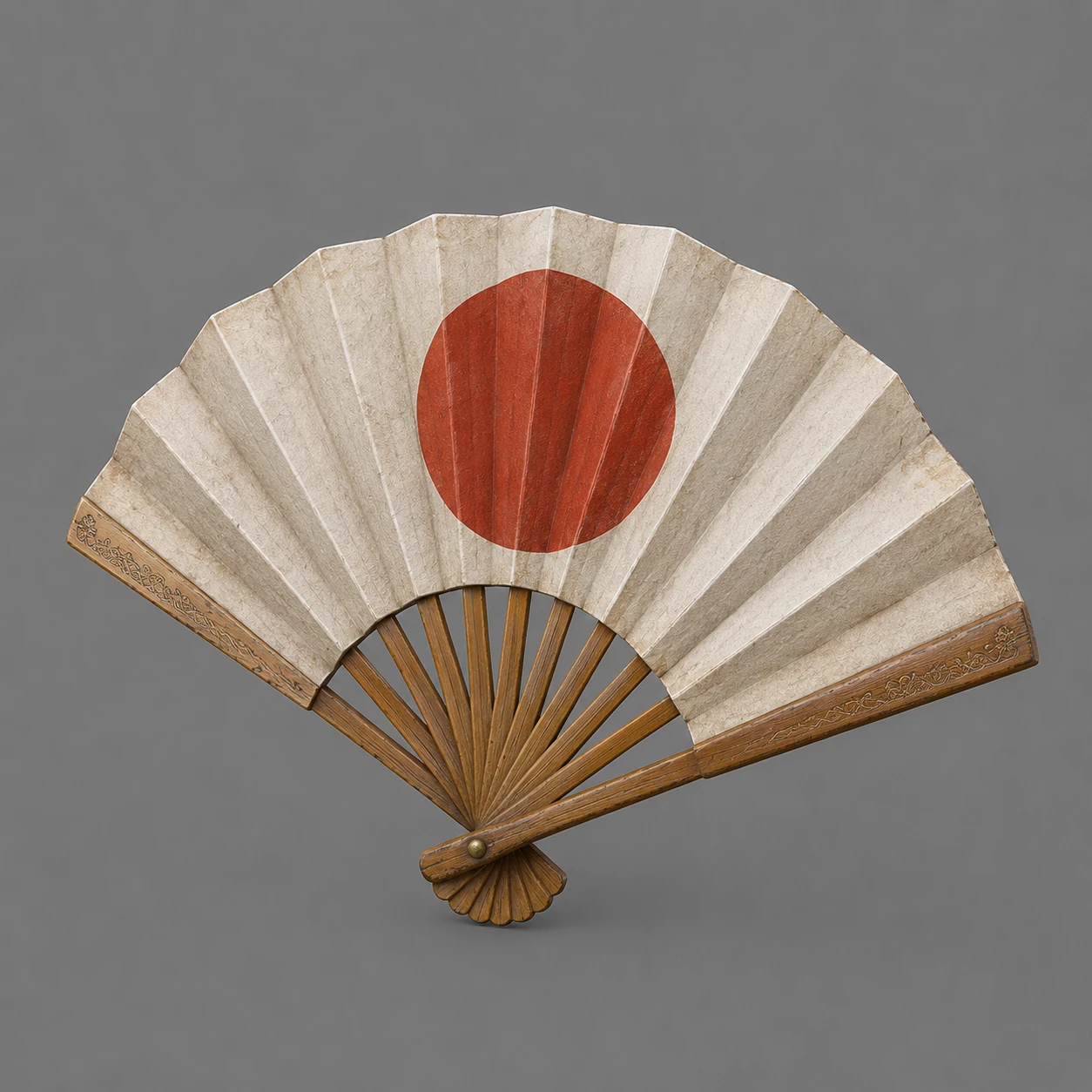
Give a miko NPC a half-open sensu during kagura in the kaguraden, with kagura suzu in the off hand and red hakama visible. Place spare fans on a lacquer shelf backstage rather than on the public offering path. For festival crowds, you can add rigid uchiwa on vendor stalls outside the purified core. Our Shinto Shrine Relics pack includes a ritual fan model sized for shrine maidens and pavilion dances.