Daruma in Red: Bodhidharma on a 15th-Century Met Scroll
A Daruma doll (達磨, Daruma) is a hollow, weighted papier-mâché figure painted red with fierce brows and a blank white eye. Shops sell it as a good-luck charm for New Year wishes, election campaigns, and business openings. The round body has no arms or legs. The name points to Bodhidharma (Daruma-Daishi), the monk credited with bringing Chan meditation to China and, through later transmission, Zen practice to Japan. The doll compresses centuries of legend into a toy that tips upright when pushed, inviting you to paint one eye when you set a goal and the second when you finish.
Bodhidharma, Zen, and the name on the label
Bodhidharma lived in the 5th or 6th century CE. Britannica describes him as the monk associated with establishing the Zen branch of Mahayana Buddhism, though early accounts disagree on his age and birthplace. Legend says he meditated facing a cave wall for nine years and cut off his eyelids so sleep could not interrupt practice, a story that later artists used to explain wide, staring eyes.
Buddhism reached Japan in the 6th century CE from Korea, and multiple schools followed from China. Medieval Zen lineages treated Bodhidharma as the first patriarch. Painted portraits of the patriarch in red robes hung in temple halls and merchant homes long before the roly-poly doll became a mass souvenir. The doll is folk craft, not liturgical equipment, yet it keeps the same face: bushy beard, heavy lids, and a robe tied at the chest.
Okiagari-koboshi and the weighted round body
The Daruma shape borrows from okiagari-koboshi (起き上がり小法師), a small roly-poly toy weighted at the base so it rights itself when tipped. Papier-mâché over a clay or plaster mold makes the shell light but stable. Washi paper layers, glue, and chalk filler build the skin; sand and lacquer or poster paint finish the surface. Gold brushstrokes mark eyebrows and beard; the belly often carries kanji for fortune, victory, or a shop name.
Because the figure has no limbs, it reads as stubborn persistence: push it down and it rises again. That metaphor matched New Year resolve in towns that sold dolls to farmers and merchants who wanted a visible reminder on a shelf. Wildform's pack model keeps the silhouette: wide base, narrow top, and the single eye you can leave blank for a player-driven goal in a shrine shop scene.
Left eye first, right eye when the wish lands
The best-known ritual is simple. When you begin a project, paint the left eye black. When the goal is achieved, paint the right eye. If the wish fails, tradition in some regions holds that you return the doll to the temple at the next festival for respectful burning, then buy a fresh one for a new attempt. Eye painting turns an inanimate prop into a contract with yourself, which is why political offices and sports teams still receive oversized Daruma every election season or championship run.
The eyes are left empty at purchase so the owner controls timing. Brush and ink sit beside shop counters in January. Some families keep last year's doll on the tokonoma alcove until the right eye is filled, then replace it at the daruma-ichi market. The custom is secular luck as much as temple doctrine, closer to ema plaques at a shrine than to sutra recitation in a Zen hall.
Takasaki, Shorinzan, and papier-mâché molds
Gunma Prefecture's city of Takasaki is widely described in Japanese sources as producing most of the country's Daruma dolls today. Local tradition traces commercial papier-mâché Daruma to the late 18th century Tenmei famine, when monks at Shorinzan Darumaji temple are said to have taught farmers to cast molds so families could sell dolls for income. The temple, founded in 1697, still hosts an annual Daruma Market on January 6 and 7, when crowds buy new dolls and bring old ones for burning.
Workshops stack molds by size, from palm charms to meter-tall campaign gifts. Red dominates because the color carried protective and celebratory meaning in East Asian folk belief, not because Bodhidharma's historical robe was scarlet. Modern factories print faces by silk screen, but hand-painted brows remain common on premium dolls. Export shops label them "Dharma dolls" for tourists who may not know the Zen patriarch behind the name.
Bodhidharma in Red Robes at the Metropolitan Museum
Museum portraits show what the doll abbreviates. The Metropolitan Museum of Art holds Bodhidharma in Red Robes, a Japanese hanging scroll dated to the late 15th century Muromachi period, painted in ink and color on paper. The image measures about 35 7/8 by 17 5/8 inches (91.2 by 44.8 cm); with mounting it reaches roughly 74 7/8 inches high. Attributed to Kano Masanobu (about 1434 to about 1530), the patriarch glares from a crimson garment, beard and eyes rendered with the same graphic emphasis you see on a Daruma cheek.
This is not a doll but a lineage image for meditation halls. It shows how artisans fixed Bodhidharma's iconography before papier-mâché workshops turned the face into a commodity. Compare the scroll's stern gaze to a modern doll's simplified circles and you see the compression from religious portrait to luck charm. For game art direction, the Met scroll offers reference for robe folds and eyebrow weight; the doll offers the toy-like proportions players recognize from festival stalls.
Shrines, temples, and where Daruma actually appear
Daruma belong to shop streets, campaign offices, and home altars more often than to forest shrines. You might spot them near a Jizo stone at a roadside temple fair, or beside an incense burner in a syncretic precinct that still sells Buddhist luck goods. Pure Shinto sandō rarely center Daruma, but New Year visits blur lines: ema boards, omamori charms, and Daruma stalls share the same winter calendar.
Zen temples may display patriarch paintings without selling dolls. Folk Shinto shops at pilgrimage towns often do the opposite. When you place a Daruma in a game scene, pair it with a temporary festival booth, a merchant interior, or a politician's desk rather than the main honden unless you are signaling a popular temple market like Takasaki's January fair.
In your scene
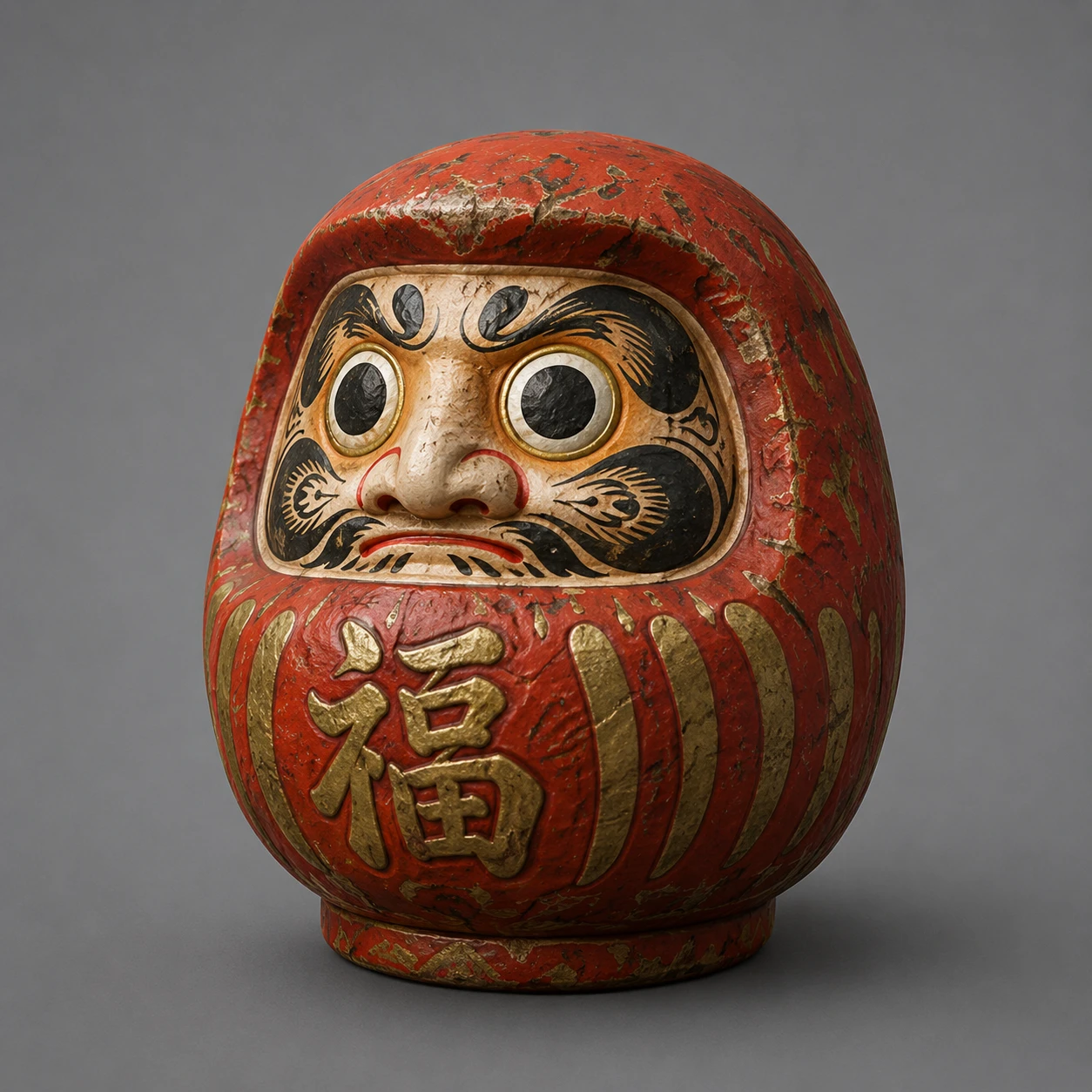
Set a red Daruma on a wooden shelf inside a souvenir stall, with a small ink dish and brush for the left eye. Scale a larger doll behind the counter for photo opportunities, and keep one eye painted to hint at an in-progress quest. Our Shinto Shrine Relics pack includes a Daruma model sized for market props next to gohei wands and courtyard lanterns.