Odin Idol: A Seated God Between Two Ravens
An Odin idol is a small sculpted figure meant to show the highest god of Old Norse religion seated in power, usually on a chair or throne with birds, beasts, or weapons around him. Unlike the thousands of Mjolnir hammer pendants that survive from Viking graves, three-dimensional god images are rare. When one turns up, it becomes front-page archaeology because it hints at how chiefs and craftsmen pictured Odin before church bells replaced heathen halls.
Cast silver, carved wood, and the seated shape
The word idol here means a cult image or display figure, not necessarily a life-size temple statue. Viking Age examples are pocket-sized, often between one and seven centimetres tall, cast in silver or bronze or carved in wood that rarely survives burial. The pose is almost always seated, legs forward, on a high-backed chair with armrests. That posture reads as rulership in early medieval art across Scandinavia and the wider Germanic world.
Typical details include a wide hat or hood, a beard or heavy moustache, rich dress with necklaces and cloak, and two birds perched on the chair arms. Animal heads on the chair back are common, and some figures hold a spear or rest their hands on armrests shaped like beasts. Scholars compare these props to attributes named in later Icelandic texts: the throne Hliðskjálf, the ravens Huginn and Muninn, and the wolves Geri and Freki.
From bracteate faces to magnate-seat metalwork
Images that may represent Odin appear long before the Viking Age. Gold bracteates from the Migration Period carry one-eyed profiles and spear-bearing riders that some researchers link to Wodan, the earlier Germanic name behind Old Norse Odin. By roughly 500 CE, stamped ornaments already mix birds, warriors, and spear gods in patterns that continue on Viking Age jewellery.
The seated idol type peaks in the 9th and 10th centuries CE at wealthy central places in Denmark and Sweden. Farmsteads with hall buildings, craft workshops, and imported luxuries yield the figurines, not average village graves. That distribution fits a god tied to kingship and sacrifice rather than everyday household prayer.
A god for chiefs, poets, and the war dead
Literary sources paint Odin as a complex patron: god of battle, runes, poetry, and the slain. Britannica notes that by the end of the pre-Christian period he ranked as the principal Scandinavian deity in written tradition, yet archaeological traces of his cult are thin compared with Thor's hammer amulets and place names.
World History Encyclopedia argues that Odin was worshipped in specific contexts, mainly by elites. Poets needed his mead of inspiration; chieftains sought victory; warriors hoped to join his hall Valhalla after death. Human sacrifice and ritual hanging appear in later accounts as Odinic rites, though we cannot map every report onto a particular figurine find.
Ravens matter for identification. Medieval poetry has Odin's pair fly over the world and whisper news into his ears. A seated figure with two birds on the arms is therefore the strongest visual argument for Odin, stronger than a generic bearded man with a hat.
When Thor took the centre seat
Norse literature later elevates Odin as Allfather, but temple layout may tell a different story. Adam of Bremen, writing around 1070 CE about the great shrine at Old Uppsala in Sweden, described a golden image of Thor in the centre, with Odin and Freyr to the side. Sacrifices went to Thor in famine, Odin in war, and Freyr for weddings. World History Encyclopedia uses that report to show Odin as one god among several in public cult, even when skaldic poetry flatters the god of their own craft.
Portable idols may have served hall shrines, burial goods, or workshop display rather than cathedral-scale temples. As Christianity spread through the 10th and 11th centuries, metal was melted, wood rotted, and the seated gods largely vanished from the archaeological record except in a few hoards and magnate sites.
Odin from Lejre at the museum in Lejre
The clearest modern example is the silver figurine called Odin from Lejre, on permanent display at Lejre Museum on Zealand, Denmark. Amateur archaeologist Tommy Olesen found it on 2 September 2009 during excavations at Gammel Lejre, a chieftain's complex linked in medieval texts to Danish royal power.
The piece is cast hollow silver with niello inlay and traces of gilding. It stands about 18 millimetres tall and weighs 9 grams, small enough to hide in a closed hand. A figure sits on a carved high-backed chair with two birds on the armrests and two animal heads projecting from the chair back. The person wears a long garment, apron, multiple bead necklaces, a neck ring, cloak, and a rimless hat. A heavy moustache or nose ridge dominates the face.
Excavators and museum archaeologists read the birds as Odin's ravens and the chair as Hliðskjálf, the high seat from which he watched the worlds. Other specialists note that the clothing resembles high-status female dress of the period and argue for Frigg, Freyja, or even a Christian bishop in disguise. No inscription names the figure. The debate is open, which is why the object travels under a provisional title rather than a Viking Age label.
Visitors can study the original in the museum gallery and buy museum-approved replicas in the shop. The find anchors Lejre's claim as a seat of early Danish power and shows how one thumbnail-sized statue can rewrite discussion of Viking religion.
Bronze parallels and the limits of proof
Other seated figures complicate easy identification. A bronze statuette from Uppåkra in southern Sweden shows a one-eyed seated man with a spear and has been called an Odin image, though damage and context leave room for doubt. Silver figures from magnate farms such as Tissø on Zealand belong to the same visual language of thrones, birds, and beast heads without offering a name in runes.
Wooden idols almost certainly existed in halls, but acid soils destroy them. We therefore judge popularity from a handful of metal survivals and from picture stones, bracteates, and brooches that carry one-eyed faces and raven pairs. A Valknut carved beside a raven scene on Gotland suggests Odinic ideas without proving that every seated figure is the same god.
Without medieval captions, each new figurine tests interpretation rather than confirming a single church doctrine. Archaeology supplies date and context; sagas supply stories written down centuries later. The gap between them is where Odin idols live.
In your scene
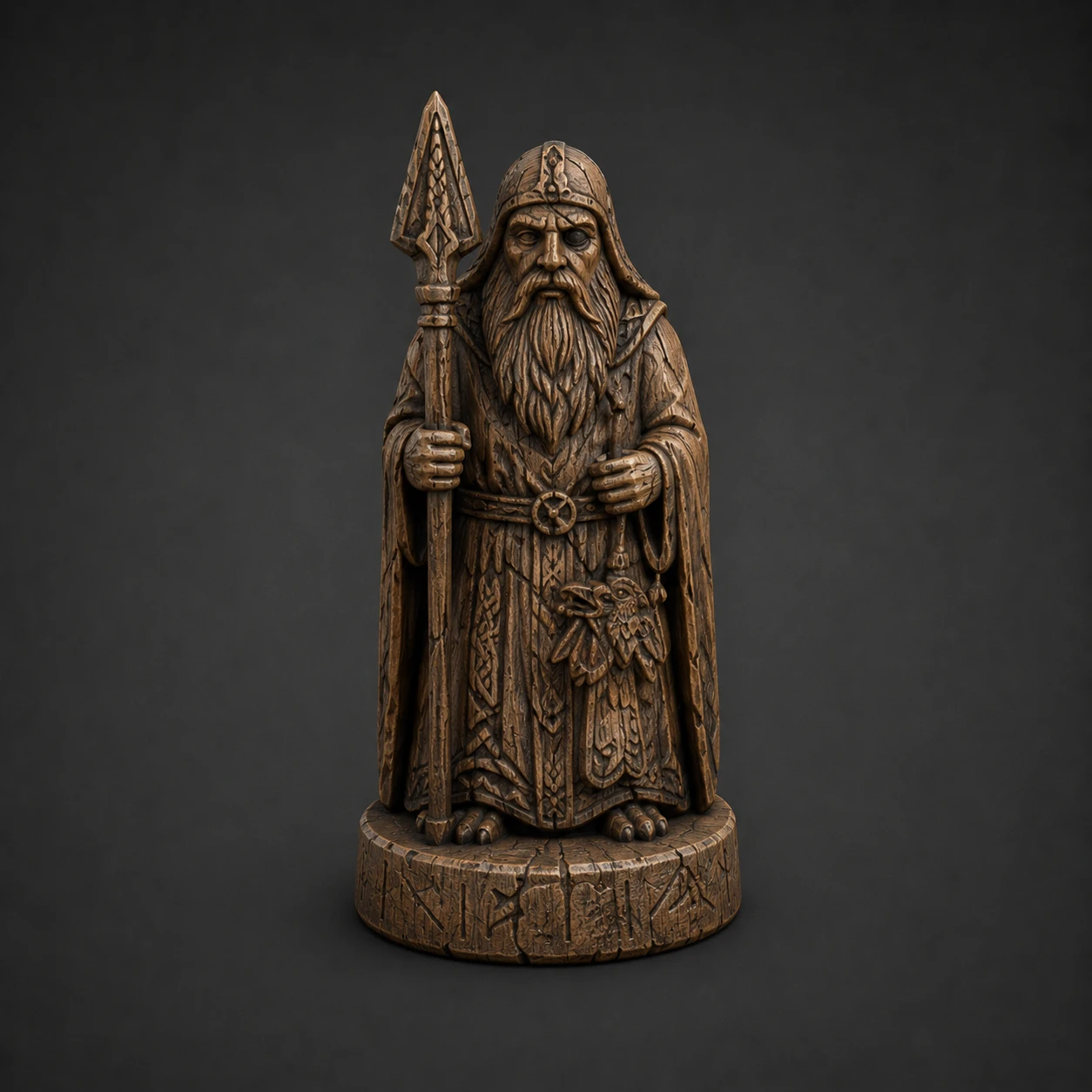
Place a small seated idol on a chieftain's high seat, a wooden shelf in a longhouse, or a burial chest beside weapons and drinking gear. Keep it thumb-sized and precious, silver or bronze with birds on the arms, not a towering marble saint. Our Viking Ritual Relics pack includes an Odin idol model for hall shrines and ritual corners.