Sistrum: Hathor's Rattle in Temple Procession
A sistrum is a ritual rattle used in ancient Egyptian temple worship. It has a handle and a U-shaped or shrine-shaped frame with crossbars that jingle when shaken. Priests and priestesses played sistra during processions for goddesses such as Hathor, Isis, and Bastet. The sound was not entertainment alone. Egyptians treated it as a way to greet the gods, calm them, and mark sacred space.
Naos frame, hoop frame, and Hathor at the top
Two main types survive in museums. The naos sistrum shapes the top like a small temple shrine (naos in Greek), sometimes with a goddess face on the handle. The hoop or arc sistrum uses a slender metal loop with sliding bars and rings. Handles may end in a double Hathor head, a cat for Bastet, or a figure of Bes, the dwarf god who guarded mothers and musicians.
The Egyptian words include sekhem and sesheshet, both echoing the hiss and clatter of the shaken bars. Roman writers who saw Isis cults abroad recognised the sistrum immediately as her emblem. Apuleius, in the second century CE, describes a priest shaking a sistrum three times in succession during a procession, a rhythm modern scholars have compared to notated temple music.
From marsh warning to temple orchestra
One origin story ties the instrument to papyrus marshes. Worshippers rattled stalks before entering wetlands where wild cows and cobra goddesses were thought to dwell, a polite announcement that humans were approaching. The habit became a metal instrument associated with Hathor, the cow goddess of joy, music, and fertility.
In the Old and Middle Kingdoms, sistra appear in banquet and daily-life scenes as well as temples. From the Eighteenth Dynasty onward, use narrowed toward formal cult. By the Late and Ptolemaic periods, faience sistra bearing royal names were dedicated in temple deposits as offerings. Columns at Dendera even imitate sistrum shapes, turning architecture into frozen music around Hathor's sanctuary.
Goddesses, kings, and the sound that opens the shrine
Hathor's son Ihy was called the sistrum player, a personification of jubilation. Bastet, as a cat goddess, often holds a sistrum in bronze statuettes. Isis carried the rattle as her cult spread from Egypt to Greece and Italy. In each case, shaking the sistrum accompanied the opening of shrine doors, the arousing of the goddess's ba (spirit), and the protection of the procession route.
Kings occasionally played the sistrum during festivals when presenting offerings to Hathor. That gesture showed the pharaoh as chief priest, not only as warrior or judge. Faience examples inscribed with a ruler's name were probably temple gifts rather than everyday musicians' tools. The object linked political authority to divine favour through sound.
A faience sistrum for Ptolemy I
The Metropolitan Museum holds a faience sistrum inscribed with the name of Ptolemy I (object 50.99), dated 305–282 BCE. It stands about 26.7 cm tall and 7.5 cm wide. The museum notes that faience sistra with royal names appear to be temple offerings associated with great goddesses.
The piece belongs to the Ptolemaic period, when Macedonian Greek kings adopted Egyptian temple ritual. A Greek name on a faience rattle shows how thoroughly the sistrum belonged to indigenous cult even as the ruling house changed. Similar bronze sistra from the Roman period survive in the British Museum, some with Bes on the handle and a Hathor head forming the capital below the frame.
Bronze, faience, and the limits of silence
Bronze sistra often survive better than wood or faience examples, though many lost their crossbars in antiquity. Temple deposits at sites such as Dendera and Deir el-Medina have yielded fragments by the hundred. Musicologists still argue how loud a sistrum was meant to be: a soft shimmer inside a shrine or a sharp rattle audible in a courtyard procession.
Because sound does not fossilise, reconstructions depend on surviving instruments, tomb scenes, and texts. A broken bar or missing ring on a museum piece may reflect wear, ritual burial, or modern damage. Dating relies on inscription, style, and findspot together. A sistrum without provenance is an ornament; a sistrum from a labelled temple trench is evidence.
In your scene
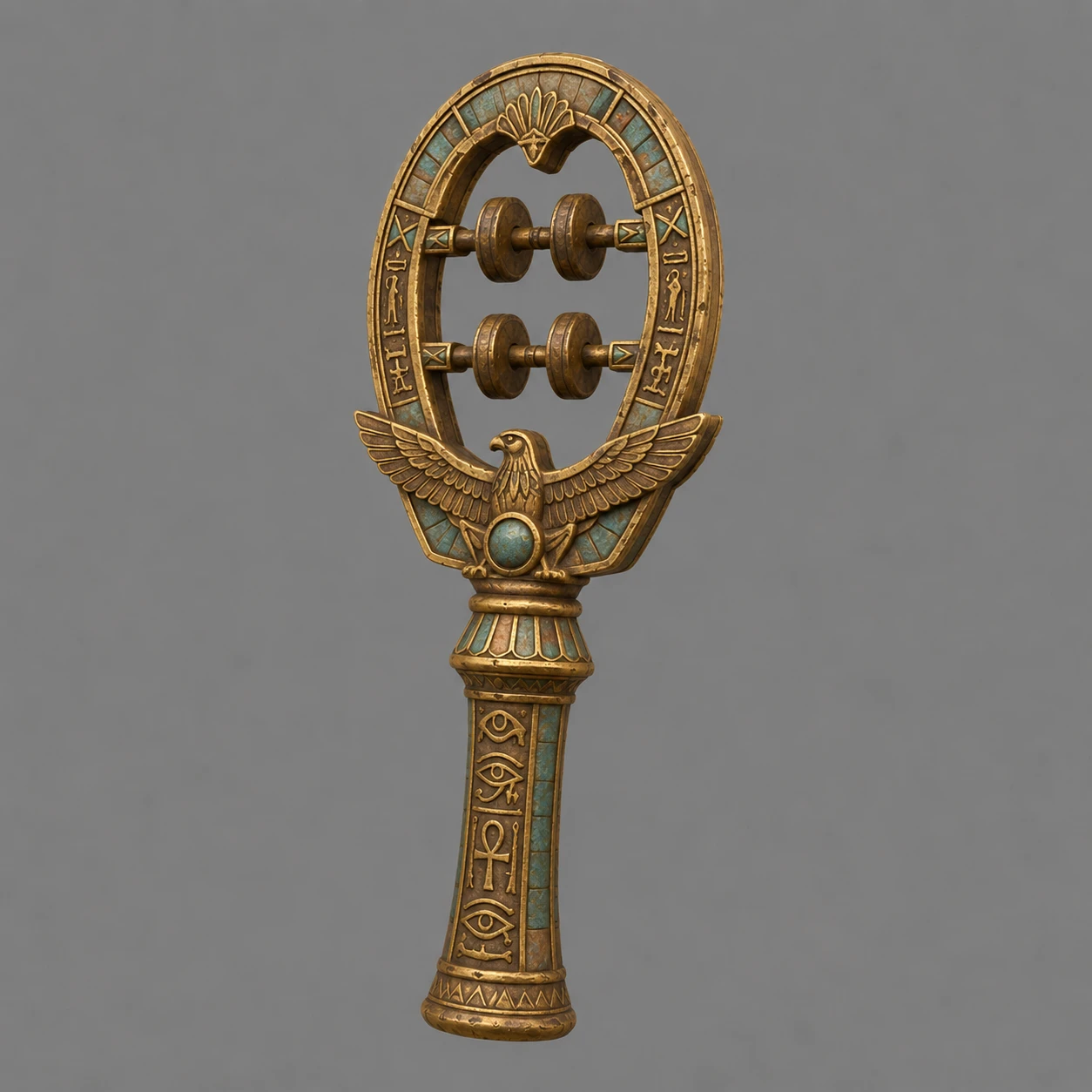
A sistrum in a priestess's hand or leaning against a Hathor shrine signals active temple worship rather than a sealed tomb. Pair it with incense and low torchlight for procession atmosphere. Our Egyptian Tomb Relics pack includes a sistrum for shrine antechambers and ritual corners.