The Oseberg Ship: A Viking Funeral Vessel from 834
A Viking funeral ship was a seaworthy boat reused as a tomb. The hull was dragged inland, sometimes up a ramp of logs, and lowered into a prepared pit or set inside a turf mound. The dead, grave goods, and sacrificed animals went aboard or into a wooden chamber built on the deck. Soil, clay, and stacked turf sealed the whole structure, turning a ship that once sailed coastal waters into a permanent house for the afterlife.
Pulling the hull ashore for burial
Ship burials were expensive. They required a vessel long enough to hold a chamber, labour to move it, and goods worth burying. Archaeology shows the ritual was staged, not improvised. Crews dismantled masts, laid the ship in a trench, and built a timber lodge behind the mast pegs where textiles, beds, and bodies were arranged.
In southeastern Norway, three famous mounds at Oseberg, Gokstad, and Tune preserved oak ships because blue clay and compact turf kept oxygen out. Elsewhere, most wooden hulls rotted away, leaving only iron rivets and stone settings that hint a boat once lay there. The funeral ship in art and archaeology is therefore both a common ideal and a rare survival.
Oseberg 834: two women and a floating household
The Oseberg ship, discovered in 1903 on the Lille Oseberg farm near Tønsberg, is the best documented Viking Age funeral ship. Britannica dates the burial chamber timbers to 834 CE and describes two female skeletons on a bed inside a tent-like wooden structure behind the mast. The mound was about 44 metres wide and originally several metres high, built from turf that pressed the hull into wet clay.
Grave goods filled the deck: woven tapestries, imported buckets, kitchen tools, three ornate sleighs, a cart, five carved animal heads, tents, and personal items such as combs and shoes. At least fifteen horses, six dogs, and two cows were killed and placed in or around the ship. Scholars think many objects were made for the funeral rather than taken from daily use. Raiders broke into the mound in antiquity and scattered the women's bones, so not every detail of the original layout survives.
Gokstad, Tune, and the clay waterline
Fifty years before Oseberg's excavation, farmers opened the Gokstad mound in Vestfold and found an even larger oak ship, about 23 metres long, with a man in his forties buried in a timber chamber around 900 CE. World History Encyclopedia notes shields hung on the rail, a tent, sledges, and riding gear, signalling a warrior or chieftain's status. The Tune ship, found in 1867, is fragmentary but confirms the tradition earlier in the Viking Age.
Recent soil studies of Gokstad and similar mounds show builders sometimes piled grey-blue river clay around the hull so the buried ship looked afloat, complete with gangplank. That detail is not visible in every excavation report from the 1880s, but it matches Ibn Fadlan's famous description of a Rus ship cremation on the Volga, where attendants laid the dead aboard and built a pyre of wood. Scandinavia preferred mound burial for elites; the river ceremony describes a related mindset in a different landscape.
Saga smoke, archaeology, and the voyage metaphor
Medieval Icelandic sagas mention ships in funeral poetry and land processions, yet most saga burials are literary set pieces. Archaeology grounds the metaphor in rivets and animal bones. A funeral ship promised mobility: the dead could sail to the realm of gods or ancestors the way the living crossed fjords. Grave goods such as drinking horns and Mjolnir pendants equipped the passenger for feasting and protection.
Not every Viking was buried in a boat. Farmers and tradespeople more often received simpler graves. The ship burial marks an elite tier where display mattered as much as belief. Interpreting each find still demands caution: a woman at Oseberg may have been a queen, a priestess, or a wealthy landowner; texts written centuries later do not settle her title.
Walking the Oseberg hull in Oslo
Today the reassembled Oseberg ship stands in the Museum of the Viking Age in Oslo, with carved prow, clinker-built strakes, and the ghost of the burial chamber marked for visitors. Britannica gives the length at about 21.5 metres and notes pine deck timbers with an oak hull built around 820 CE in western Norway. Standing beside the rail shows how the funeral reversed the ship's purpose: oarports and rigging fittings remain, but the vessel will never sail again.
Conservators monitor the wood because early twentieth-century display dried some planks. Even so, the ship is the anchor object for every discussion of Viking funeral fleets. Photographs from the 1904 excavation show workers brushing turf from serpent carvings still sharp enough to cast shadows a millennium later.
Rivets without hulls, and what we still argue about
Hundreds of Scandinavian burials contain only a boat-shaped arrangement of stones or iron rivets. They prove the idea spread beyond the three preserved ships, but they give fewer stories about who lay inside. DNA and isotope work on Oseberg's women continues to refine their origins and diet, while debate continues over whether the burial reflects Ásatrú cult practice, political theatre, or both.
New radar surveys keep finding ship outlines under farmland, including the Gjellestad ship near Halden, excavated in 2020. Each discovery adjusts the map of who could afford a hull for a tomb. The funeral ship in your scene should feel rare, costly, and deliberate, because that is what the ground still shows.
In your scene
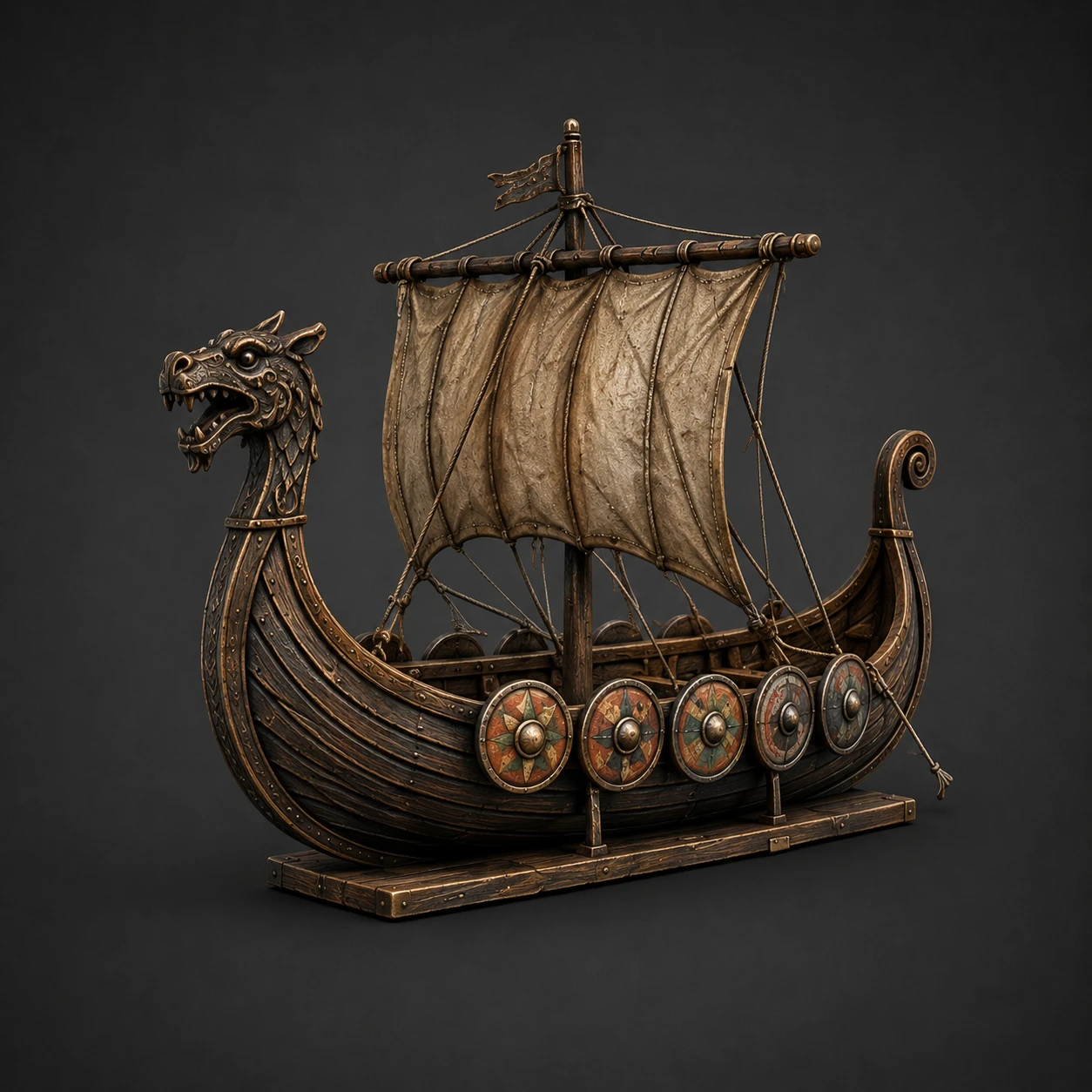
Set a funeral ship half buried under a turf mound, or expose the hull in a ritual pit with clay piled along the waterline and grave goods on deck. Pair it with a Valknut stone or carved posts for an elite send-off. Our Viking Ritual Relics pack includes a funeral ship model scaled for burial mounds beside a longhouse or fjord shore.