Scarab: Khepri's Beetle from Dawn to the Tomb
A scarab is an amulet or seal cut in the shape of the sacred dung beetle, Scarabaeus sacer. Egyptians watched the insect roll a ball of dung, lay eggs inside, and emerge with new life from buried dung. They linked that cycle to Khepri, the morning aspect of the sun god, who renewed the sun at dawn. Scarabs served as jewellery, administrative seals, royal propaganda, and tomb protection for more than two thousand years.
Beetle back, flat base, loop for string
The typical scarab is oval from above, with a carved beetle top showing a divided wing case, head, and legs. The underside is flat for an inscription, a throne name, or a decorative pattern. Most pierce lengthwise so they could hang on a cord or be set in a ring bezel. Materials range from steatite and faience to carnelian, amethyst, and glazed pottery.
Not every beetle amulet is a "heart scarab." Daily wear scarabs might carry good-luck wishes or the name of a pharaoh. Commemorative scarabs of Amenhotep III record royal marriages and a lake he built for Queen Tiy. Heart scarabs are larger, often stone, and inscribed with Chapter 30B of the Book of the Dead to silence the heart during judgment.
Khepri, Ra, and the ball of the sun
World History Encyclopedia explains the theology plainly: the beetle rolls dung as Khepri rolls the solar disk across the sky and through the underworld. When Ra became the dominant sun god, Khepri continued as the dawn form. The scarab therefore meant creation, rebirth, and safe passage, not merely good luck.
Scarabs became common amulets during the First Intermediate Period (c. 2181–2040 BCE) and remained popular through the Ptolemaic age. They crossed social boundaries. A farmer might wear a cheap faience scarab; a king might commission gold and lapis examples. That range is why scarabs are among the most numerous Egyptian objects in museum drawers worldwide.
Seals, thrones names, and royal propaganda
On the underside, a scarab could function as a seal. Officials pressed the base into wet clay to authorise storage jars or letters. Royal scarabs spread a pharaoh's throne name across the bureaucracy. At Deir el-Bahri, excavators found nearly three hundred scarabs and seals near Hatshepsut's temple, many bearing every title she ever used. Scarabs were portable billboards for a reign.
Winged scarabs of blue faience appear on mummy nets across the chest, combining the beetle with outspread falcon wings to protect the whole body. The type flourished in the New Kingdom and Third Intermediate Period. Heart scarabs, placed over the chest of the mummy, addressed a different fear: that the heart would testify against its owner at the weighing before Osiris.
Heart scarabs and the judgment hall
The heart was left inside the body during mummification. Egyptians believed it held memory and moral character. In the Hall of Two Truths, Anubis weighed the heart against Maat's feather while Ammit, the devourer, waited below the scales. Chapter 30B of the Book of the Dead, often carved on heart scarabs, commands the heart not to oppose the deceased in that ordeal.
The British Museum holds a glazed composition heart amulet (EA29440) with a human-faced scarab form and Chapter 30B on the base, dated c. 1375–1275 BCE. The red inlaid face represents a personified heart. Royal heart scarabs are rarer before the New Kingdom; a green jasper example linked to King Sobekemsaf of the Seventeenth Dynasty shows how early the type could appear for elite burials.
Millions in faience, few answers in stone
Steatite scarabs were often glazed blue or green after carving. Mass production used rotary tools and moulds, so many examples look similar until you read the inscription. Archaeologists date scarabs by typography, royal names, and stratigraphy rather than by style alone.
Scholars still debate individual readings on worn bases. A scarab without a name might be a tourist souvenir from Alexandria or a genuine heirloom passed down for generations. Context from excavation notebooks matters as much as the object. Scarabs are common, but a scarab from a sealed tomb carries far more historical weight than one bought in a nineteenth-century market.
In your scene
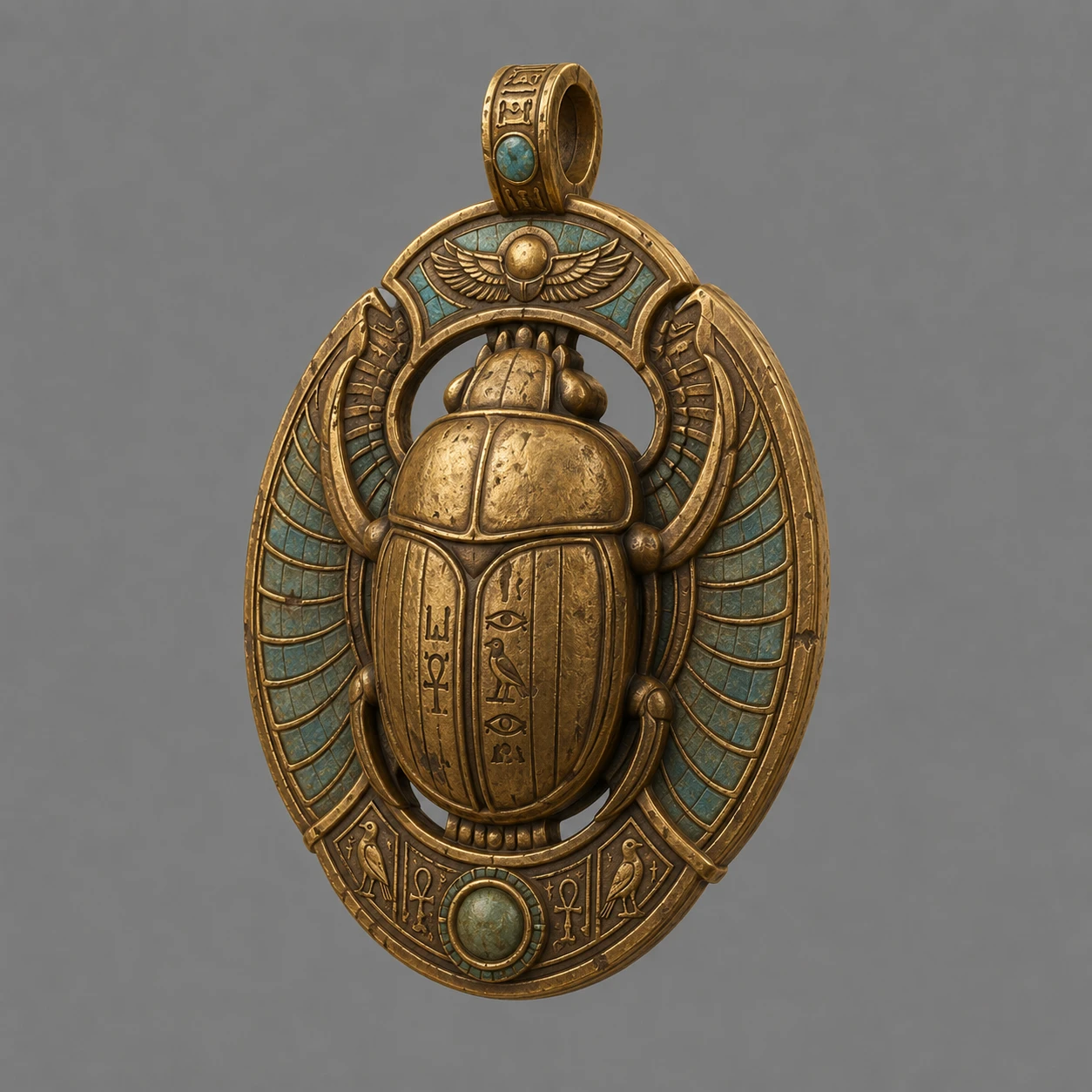
One scarab on an offering table or at the feet of a sarcophagus reads as Egyptian ritual equipment without cluttering the floor with dozens of duplicates. Faience blue catches torchlight well. Our Egyptian Tomb Relics pack includes a scarab amulet for tomb niches and temple treasury shelves.