La Tène Fibulae: Cloak Pins from Lake Neuchâtel to Britain
A La Tène fibula is an Iron Age brooch of the safety-pin family: a curved bow, a spring at one end, a pin, and a catch plate that grips folded cloth. The name comes from La Tène culture, the mid Iron Age horizon named after a site on Lake Neuchâtel in Switzerland, not from a single factory type. Fibulae in this tradition range from plain bronze cloak fasteners in warrior graves to gold showpieces with animal heads, glass inlay, and scrolling bows that cover half the chest. Without buttons or zippers, they were how Celtic men and women closed tunics and heavy wool cloaks, and their changing shapes help archaeologists date sites from Gaul to Britain.
Bow, spring, catch plate, and the La Tène curve
Technically a fibula works like a modern safety pin turned into jewellery. The bow is the visible arc; early La Tène examples flatten it into a ribbon of metal wide enough for engraved spirals or stamped lines. The spring, often bilateral with coiled wire on both sides of the pin head, provides tension. The pin passes through fabric layers and rests in a catch plate or turned foot at the bow's opposite end. Roman writers called these objects fibulae; Celtic-language terms do not survive on the brooches themselves.
La Tène bows differ from earlier Hallstatt pins by their flowing S-curves, vegetal fills, and habit of making background and motif interchangeable. World History Encyclopedia notes that Celtic brooches could take almost any form, including snakes, horses, boats, and human heads, but the bow fibula with strong spring remains the workhorse type across the 5th to 1st centuries BCE. Materials run from wrought iron and cast bronze to brass, silver, and gold on elite pieces.
From Swiss lakeside deposits to Atlantic graves
The La Tène culture label covers roughly 450 BCE to 50 BCE in much of western and central Europe, overlapping and then replacing Hallstatt centres as trade routes shifted. World History Encyclopedia describes offerings thrown into Lake Neuchâtel, including brooches among weapons and animal figurines, which ties the culture's art to watery votive practice as well as to burial.
In Britain the earliest bow brooches appear in stratified contexts from about 450 BCE onward, often called La Tène I or La Tène A types in continental terminology. Distribution clusters in southern and eastern England at first, with Middle Iron Age varieties spreading north. Ireland shares the wider La Tène art world but has a thinner early brooch record; many Irish masterpieces, such as the medieval Tara brooch, belong to later penannular traditions even when their decoration looks "Celtic" to modern eyes. Britannica notes La Tène metalwork and stone sculpture mainly in northern Ireland from perhaps 300 BCE, with hill forts and links to northern England.
Fastening cloaks, signalling rank, and guarding the wearer
Cassius Dio's description of Boudicca, with a thick cloak fastened by a brooch over a many-coloured tunic and torc, is the classic literary snapshot of how these objects read in public. Graves sometimes contain several fibulae pairs, suggesting layered clothing or multiple closures on one heavy garment. A burial in Baden-Württemberg from around 400 to 300 BCE wore three pairs of unlike designs, which implies variety was normal even in one outfit.
Beyond utility, brooches displayed wealth and may have acted as amulets. World History Encyclopedia reports brooches with animal totems, mask heads, and dragonesque S-shapes that mix Celtic curves with Roman taste for strange beasts. Wearing a boar or horse might have been thought to lend courage or protection, paralleling animal crests on helmets and shields. Large brooches on heavy winter cloaks could also mark status, as Corinium Museum notes for a copper-alloy La Tène example from about 300 BCE in Britain.
From Hallstatt pins to Roman provinces and penannular heirs
Fibulae did not appear full-formed in the La Tène period. Continental Hallstatt graves already held brooches with regional styles that foreshadow later bows. As La Tène metalworkers adopted the faster potter's wheel and Mediterranean trade, brooch typologies multiplied: reverted feet, mock springs made from three rods, external chords giving way to hinged arrangements by the late Iron Age. Roman conquest of Gaul in the mid 1st century BCE did not end brooch use; it fed new families of Romano-British types descended from La Tène prototypes, including forms related to the Colchester type.
In Ireland and Scotland the penannular brooch, an almost-complete ring with a pin, became the medieval heir to ancient pin traditions. The Hunterston and Tara brooches are far later than La Tène fibulae but show how the same cultural preference for dense metal ornament persisted. Modern "Celtic" jewellery often copies medieval penannulars or Victorian revivals rather than Iron Age bow fibulae, so a La Tène prop in a game scene marks an earlier century than a Tara-style brooch would.
The Braganza Brooch in the British Museum
The gold Braganza Brooch, found in Spain and dated about 250 to 200 BCE, is the textbook museum anchor for a high-status La Tène fibula. World History Encyclopedia describes a Celtic warrior with shield and helmet facing a leaping hound on the bow, with dog-head terminals on the curved guard behind him and glass inlay in the eyes, now lost along with the pin and spring. The piece measures about 14 cm long and is thought to be the work of a Greek craftsman in the Iberian Peninsula, which illustrates how La Tène art crossed borders and workshops.
In London the brooch sits among Celtic collections that stress art and identity rather than a single national style. It is not a plain cloak pin but a narrative sculpture small enough to hold in the hand. Comparing it to modest bronze fibulae from Gaulish graves shows the full social range La Tène culture spanned: functional iron and bronze for soldiers and farmers, gold tableau for patrons who could hire foreign specialists.
What survives in soil, and how typology misleads
Bronze and iron fibulae are common finds in settlement ditches and graves; gold ones are rare and often come from hoards or high-status burials. Corrosion can freeze a pin in place or snap the spring, so museum pieces frequently lack their original tension. Typology charts divide La Tène brooches into phases A through D, but British sequences do not map perfectly onto continental labels, and radiocarbon dates on associated bone are still sparse for some regions.
Archaeologists also warn against calling every curved brooch "La Tène" without context. The culture name appears in non-Celtic areas and coexists with older traditions. A single bronze fibula in a scene cannot date a whole hill fort unless other goods agree. Still, when spirals, flattened bows, and bilateral springs appear together, they remain one of the strongest fingerprints of mid Iron Age Celtic dress in western Europe.
In your scene
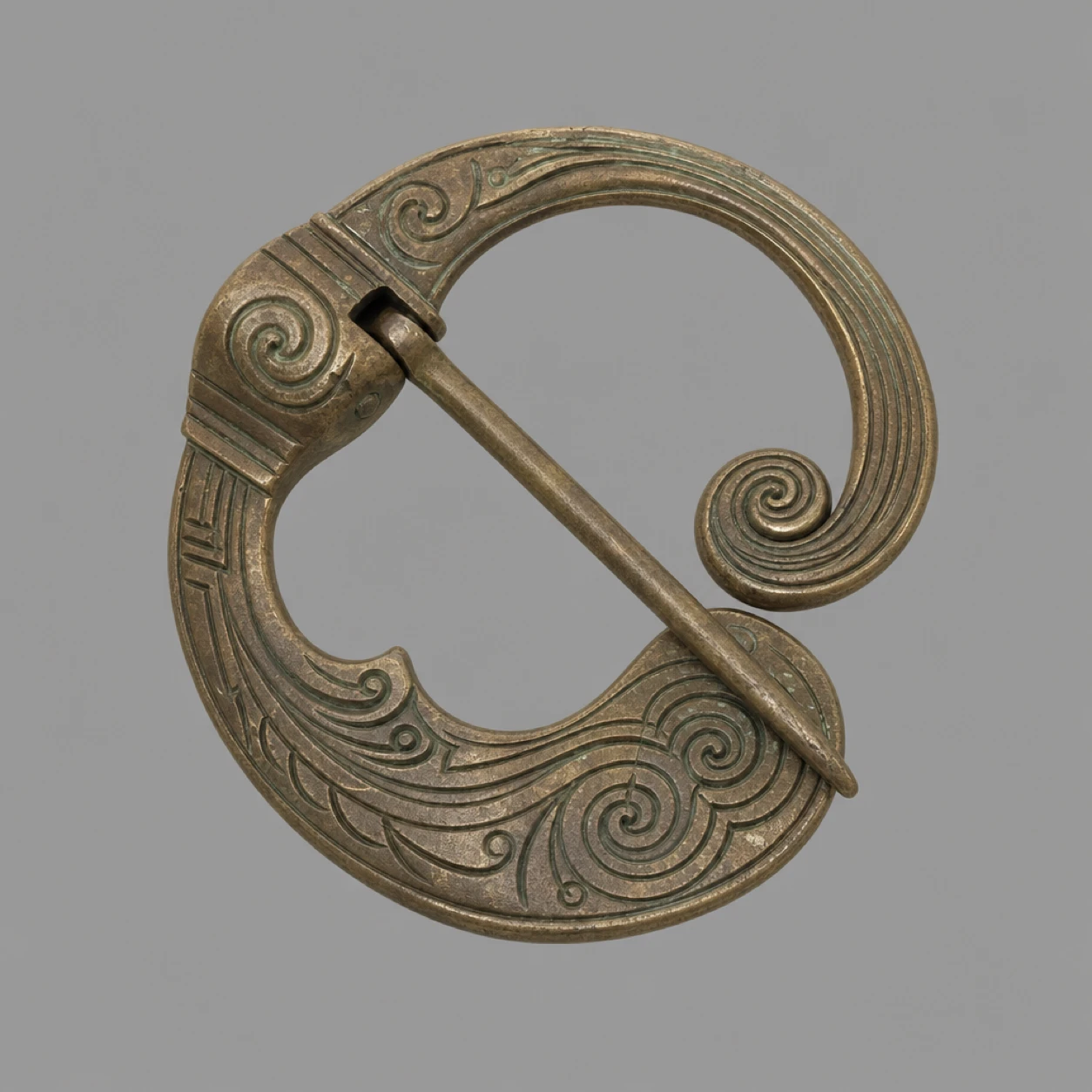
Pin a La Tène fibula at the shoulder of a wool cloak on a chieftain or druid figure, not on every extra in the crowd. Match it with a Battersea-style shield or a Gundestrup cauldron prop if you want a mid Iron Age ritual ensemble rather than Roman province dress. Our Celtic Ritual Relics pack includes a La Tène fibula model for hill-fort halls and grove gatherings.