Mead in the Longhouse: Stave Barrels for Honey Wine
A mead barrel is a coopered wooden vessel built from curved staves held by hoops, used to store fermented honey drink between brewing and serving. In Norse and wider Germanic society, such tubs and casks sat in chieftains' halls alongside open vats, ceramic jugs, and the drinking horns passed at formal feasts. The barrel was practical storage, but it also marked a household that could afford honey, time, and space for a sweet drink reserved for celebration.
Staves, hoops, and what counts as a barrel
The familiar barrel shape comes from stave technology: thin wooden planks planed with a slight curve, set vertically around a flat base, then tightened with hoops of split wood, iron, or both. When the wood swells after contact with liquid, the joints seal. Smaller open tubs and buckets used the same method without a fully closed barrel form.
Archaeology rarely finds whole barrels intact because wood rots in soil. What survives are stave fragments, iron hoops, and metal-bound bucket rims that prove how common cooperage was in early medieval northern Europe. A mead barrel in a longhouse might look like a tall tub with a lid rather than a modern export cask, but the job was the same: keep ale or mead clean, contained, and ready to ladle into horns or cups.
Cooperage before and during the Viking Age
Stave-built containers have a long history in northern Europe. Trade towns and farmsteads needed waterproof tubs for grain, fish, and liquids long before the Viking Age label applies. By the time Norse chieftains were hosting sumbl in timber halls, coopered vessels were ordinary domestic equipment, not exotic imports.
That continuity matters for scene building. A hall barrel is not a fantasy prop; it belongs to the same craft tradition as the wooden buckets buried in high-status graves and the metal hoops that turn up across Scandinavian trading sites, chosen for how the wood behaved once the vessel was filled.
From brewing vat to barrel at the sumbl
Mead itself is honey fermented with water, sometimes with added yeast or spices. Britannica's entry on mead notes that honey drinks were widespread among the peoples of Scandinavia, Gaul, and Teutonic Europe, and that in Anglo-Saxon poetry such as Beowulf, mead is the drink of kings and thanes.
World History Encyclopedia describes how Norse households brewed mead, ale, and fruit wine in open vats: water heated with honey or malt, then left to ferment and strained into jugs for storage. The yeasty dregs left behind were valuable and often went into the next batch. A barrel or large tub came after the vat, holding finished drink until the lady of the house or her servants ladled it out at the sumbl, the formal drinking party in a chieftain's mead hall.
The hall itself was a statement of power. Any leader who wanted loyal warriors needed a building big enough to feast them and stock worth showing off. Mead carried extra prestige because honey was costly. The National Museum of Denmark notes that Vikings drank strong beer at festive occasions together with mead, a sweet fermented drink made from honey, water, and spices, while imported grape wine remained a luxury for the few.
When ale outranked mead in daily drinking
Modern retellings often treat mead as the default Viking drink. Sources suggest a more mixed table. The same World History Encyclopedia article stresses that ale was drunk widely, seemingly every day, because boiled brew was safer than untreated water. Mead mattered at feasts, funerals, treaties, and in myth, but barley beer fed the hall on ordinary nights.
That distinction helps place a mead barrel correctly in a scene. One or two coopered tubs near the high seat can signal wealth and a coming celebration without implying that every barrel in the farmyard holds honey wine. Strong ale for the sumbl could come from similar wooden storage. Only context, season, and rank tell the viewer which liquid is inside.
Norse myth pushes mead to the foreground anyway. The Mead of Poetry, stolen by Odin in eagle form, begins in vats and a kettle before it reaches the gods. Those story vessels are magical, but they echo real halls where fermented honey was worth guarding, sharing, and boasting over.
Sutton Hoo tubs at the hall-feast end of the chamber
The clearest museum glimpse of hall storage vessels in the early medieval North Sea world comes from Sutton Hoo in Suffolk, England, excavated in 1939 and now documented by the British Museum. The burial dates to the early seventh century CE, before the Viking Age, but it belonged to the same Germanic feasting culture that Beowulf describes.
Inside the ship's burial chamber, domestic objects were placed at the east end: wooden tubs and buckets, two small cauldrons, and one very large cauldron fitted with an intricate iron chain meant to suspend it over a fire. The chain alone implies a hall with roof beams strong enough to hang cooking gear above the hearth.
The wooden tubs did not survive as solid objects. Like most organic hall furniture, they decayed and survive only as soil stains and excavation records. Curators group them with feasting equipment rather than farm tools because they sat beside Byzantine silver, drinking horn fittings, and the cauldron set. We cannot prove those particular tubs held mead, but they show the kind of coopered storage a wealthy hall owned when honey wine and ale were both on the menu.
Wood that rots and dregs worth keeping
Whole mead barrels are scarce in museum cases for the same reason whole drinking horns are rare: organic materials leave the archaeological record quickly. Iron-bound staves, hoop fragments, and residue analysis on pottery tell most of the story. Where chemists have tested early medieval residues, honey-based ferments appear, but barley beer dominates daily consumption in both written and botanical evidence.
Historians also caution against filling every Viking tub with spiced mead. Honey production took beekeeping or wild foraging, and sugar from honey was precious in northern economies. A hall might brew mead for weddings, funerals, and victory feasts, then rely on ale barrels for the weeks between. If your scene needs one vessel to read as special, put the mead barrel near the high seat, the oath cup, or the imported wine crate, not beside the churn and wash tub.
In your scene
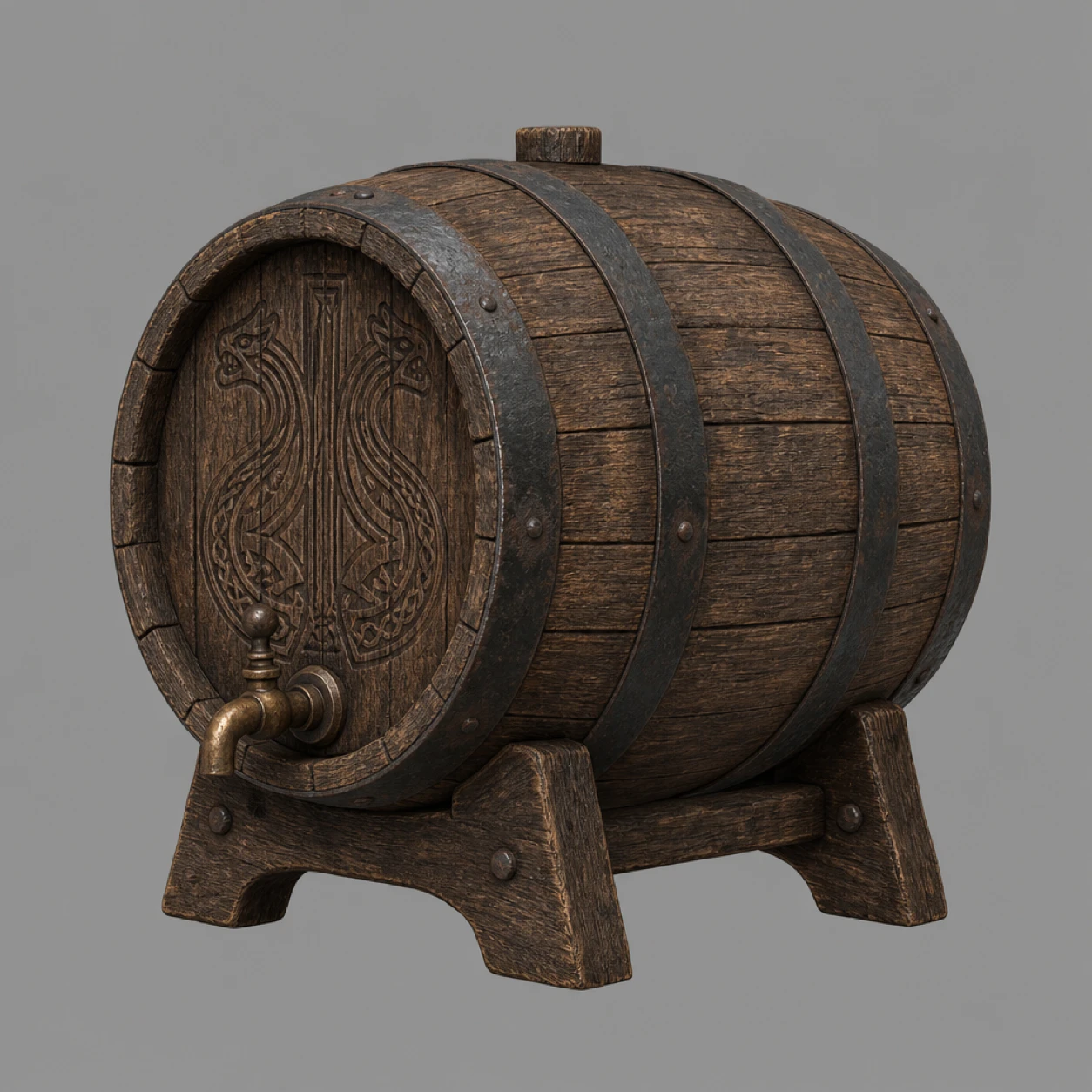
Place a mead barrel where a longhouse stores its best drink: against the wall near the hearth, beside a hanging cauldron chain, or stacked with smaller buckets ready for serving. Pair it with horns and benches if the feast is underway, or leave it sealed if the hall is quiet between sumbl nights. Our Viking Hall Relics Vol. 2 pack includes a mead barrel model sized for Norse hall interiors and settlement storehouses.