Corinthian Helmet: Bronze Face Armour for the Hoplite
A Corinthian helmet is a bronze headpiece beaten from a single sheet of metal to cover almost the entire face and neck of a Greek hoplite. A narrow T-shaped opening left slits for the eyes and mouth. The type takes its modern name from Corinth, where vase painters showed it early and often, though workshops across the Greek world produced similar forms from the seventh century BCE into the Classical period.
One sheet of bronze, nasal, and cheek-pieces
Craftsmen hammered a disc of bronze into a deep bowl that wrapped the skull, cheeks, and back of the neck. A raised nasal guarded the nose. Hinged or riveted cheek-pieces could swing up when a warrior pushed the helmet back on his head, a pose painters loved on red-figure pots. Crest holders on the crown accepted horsehair plumes that made a soldier visible above the shield wall. Inner padding, now lost on most survivors, kept the thin metal from biting the scalp.
The helmet was expensive. Decoration could include incised borders, embossed brows, or relief figures on the brow. Not every hoplite owned a crested example, but the silhouette on pottery is unmistakable: a smooth bronze dome with a vertical eye slit and a horizontal mouth line.
From Archaic workshops to the phalanx line
Corinthian-type helmets appear on Corinthian pottery from the late eighth and seventh centuries BCE and spread as the hoplite phalanx became the dominant infantry form. World History Encyclopedia's hoplite article describes the full panoply: long ash spear, short iron sword, large round shield, and a leather-lined bronze helmet that protected head, neck, and face. Hoplites supplied their own gear, so helmet quality tracked wealth and civic pride.
By the fifth century BCE, open-faced helmets such as the pilos gained ground where visibility and hearing mattered more than total enclosure. Corinthian forms did not vanish overnight. Vase painters still showed them pushed back on the brow during symposium scenes or on the march, and dedications at sanctuaries like Olympia preserved beaten bronze long after battlefield fashion shifted.
In battle, at the symposium, and on the brow
In combat the helmet's strength was coverage; its weakness was sensory isolation. The T-shaped slot limited peripheral vision and muffled commands in a noisy phalanx crush. That trade-off made sense when spears and stones threatened from above. Off duty, art shows warriors resting with the helmet tipped back, face exposed, crest trailing. The same object marked both the terror of the line and the citizen-soldier at ease.
Hoplites often dedicated captured or outgrown armour at sacred sites after victory. Bronze helmets piled at Olympia and Delphi were not mere trophies. They thanked the gods and advertised a city's success in war. A helmet on a temple terrace therefore reads as military votive as much as personal kit.
From full face plates to lighter caps
Later Classical armies mixed hoplites with lighter troops. Greek warfare overview notes linen corselets and open pilos helmets replacing heavier bronze as tactics grew more flexible. Macedonian reformers under Philip II favoured the Phrygian helmet with better hearing and sight. Corinthian types lingered on coins, sculpture, and Roman copies because the profile had become a visual shorthand for "Greek warrior."
Scholars still debate how "Corinthian" the Corinthian helmet really is. Herodotus names the type once; the label may describe style more than a single factory town. Typology now rests on shape, findspot, and vase evidence rather than ancient brand names.
A bronze helmet from Olympia's sanctuary
World History Encyclopedia's image record publishes a bronze Corinthian helmet of the sixth to fifth century BCE in the Olympia Archaeological Museum. The piece illustrates the standard domed form found in dedicatory deposits at the site: beaten bronze, cheek protection, and the narrow facial opening that defines the type. Olympia's archaeology ties such helmets to athletic and military votives from across the Greek world, not to a single polis.
The British Museum's hoplite teaching pack likewise illustrates Corinthian helmets on Athenian pottery of about 540 to 480 BCE, with crests of horsehair and warriors wearing them full-face or pushed back on the head. Those images confirm what metal examples show: the helmet was a lived object, adjusted in real time rather than worn as a rigid mask for every hour of campaign.
What survives in bronze, and what we guess
Hundreds of Corinthian helmets survive from sanctuaries, tombs, and stray finds. Many are corroded, cheek-pieces missing, crest attachments broken. Dating relies on associated pottery, inscription, and stylistic details such as eyebrow ridges or brim shape. A helmet without provenance might be a genuine votive or a nineteenth-century tourist piece; excavation context still matters.
Replica makers and game artists often exaggerate the eye slit or add fantasy crests. Real examples are smaller and closer-fitting than modern props suggest. When sources disagree on exact century ranges, typologists quote broad brackets such as sixth to fifth century BCE rather than a single battle year.
In your scene
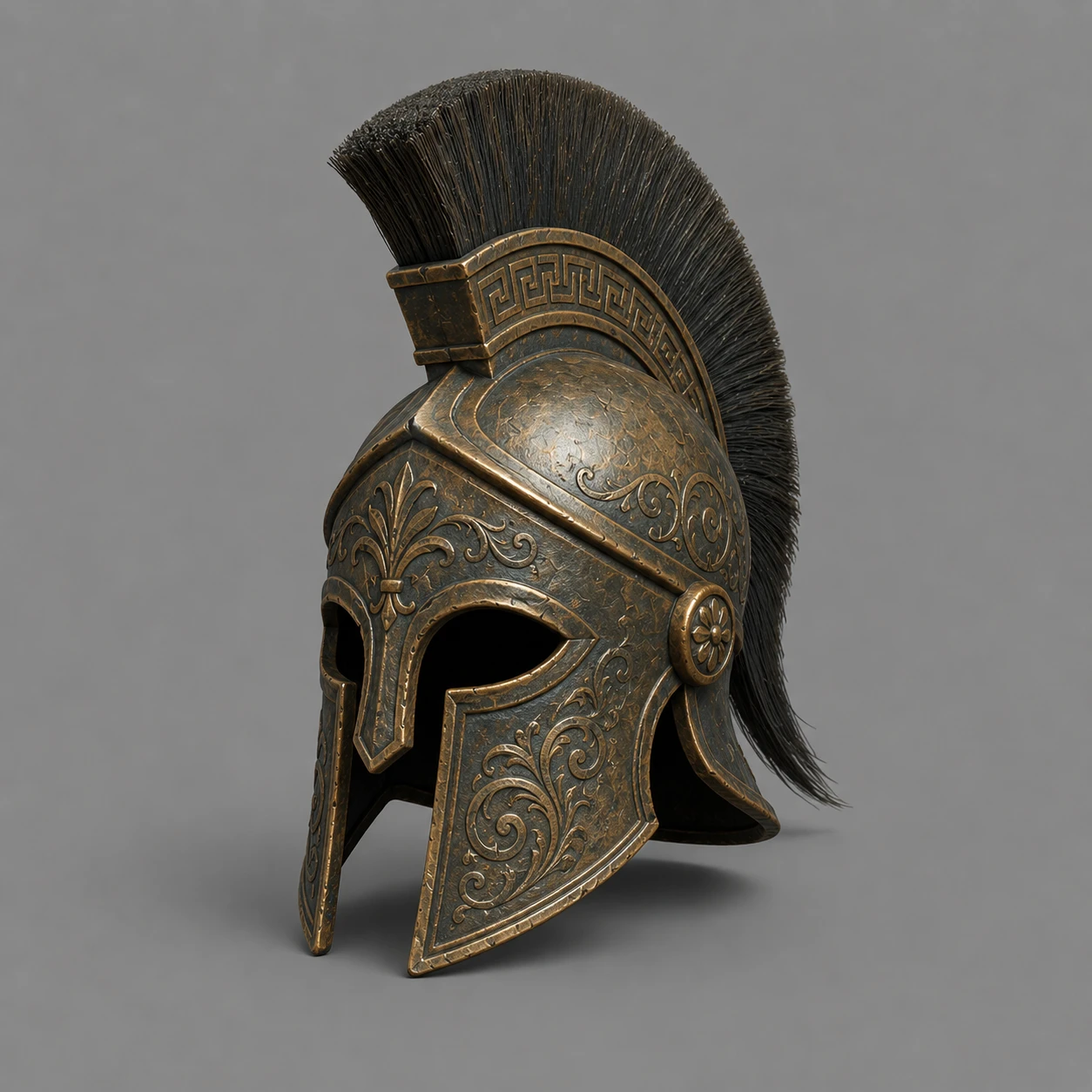
A single Corinthian helmet on a temple step or leaning against a column reads instantly as classical Greece without filling the floor with duplicate armour. Crest optional: many dedications were plain bronze. Our Greek Temple Relics pack includes a Corinthian helmet suited to sanctuary terraces and hoplite barracks corners.