Miniature Sarcophagus: Coffin Craft at Shrunken Scale
A miniature sarcophagus is a small coffin made to the same design principles as a full-size burial case, but scaled down for a shabti figure, a child, a foetus, or a mummified animal. Egyptians treated these objects seriously. Painted decoration, funerary texts, and architectural details such as vaulted lids and wadjet-eye panels copied elite human coffins because the small box still had to protect a body on its way to the afterlife.
Anthropoid shape, vaulted lid, and wedjat eyes
Full-size anthropoid coffins of the Late Period follow a mummiform outline: broad shoulders, narrow feet, a face panel on the lid, and bands of hieroglyphs naming the owner and offering spells. Miniature versions repeat that silhouette in cedar, sycamore, or cartonnage at lengths as short as 40 cm. The lid is often vaulted with end ridges, the same profile used on Middle Kingdom rectangular coffins translated to smaller scale.
The wadjet-eye panel on the side allowed the symbolic "eyes" of the deceased to look out toward the rising sun. Even when the occupant was a wooden shabti rather than a human corpse, craftsmen painted Isis and Nephthys at the head and foot ends, just as on a nobleman's coffin. Scale changed; theology did not.
Shabti boxes, child burials, and animal mummies
One common type is the shabti-coffin: a box sized to hold a single ushabti figurine. The British Museum holds a wooden model coffin made for a shabti of Teti (EA35016). It copies the rectangular vaulted style of the later Middle Kingdom and Second Intermediate Period. Vertical inscriptions run along the long sides; Isis and Nephthys appear at the ends.
The scribe left placeholder text in places, writing "men pen" ("this so-and-so") where a name would later be inserted. In two spots the name Teti was added without erasing the placeholder. That workshop habit shows how miniature coffins were partly prefabricated, then personalised. Other small coffins held mummified cats, ibises, or falcons in sacred animal necropoles.
Child and foetal burials also used miniature anthropoid cases. Excavations have found very small coffins with carefully carved faces and imported cedar wood, a costly material in Egypt. These burials are rare compared with adult tombs, but they show that official mortuary care could extend to lives lost before birth.
From Middle Kingdom models to Late Period workshops
Model coffins for shabtis appear when ushabti figures themselves become common in the New Kingdom. Rather than loose figures in a box, some burials enclosed each worker in its own coffin, multiplying funerary equipment. The practice peaked among officials who could afford hundreds of shabtis, each with or without a miniature case.
By the Late Period (c. 664–332 BCE in many chronologies), miniature anthropoid coffins share the same yellow, red, and blue palette as large coffins from Thebes. Cartonnage examples moulded linen and plaster into light shells for small occupants. Ptolemaic and Roman Egypt continued the tradition for sacred animals and votive offerings, long after the great royal burials of the New Kingdom had ended.
The shabti coffin of Teti at the British Museum
Object EA35016 is a close copy of a standard rectangular coffin type. The background is painted white; vertical columns of text cover the long sides. Isis and Nephthys stand at the ends. A wadjet-eye panel sits on one side. The scribe deliberately left certain hieroglyphs incomplete, a normal precaution when carving sacred signs.
The name Teti appears between horizontal lines on the lid and twice on the body, identifying the shabti owner. The piece teaches how miniature coffins were not toys. They were practice in reduced form of the same ritual language that wrapped a vizier or priest. Walking from a hall of full-size coffins to this case, a visitor sees one design system at two scales.
Cedar, paint loss, and empty boxes
Wood miniatures often arrive in museums with paint flaked away and crevices opened by tomb damp. Cedar of Lebanon, prized for large coffins, appears even on small cases because import status mattered symbolically. Archaeologists X-ray miniature coffins before opening them; some hold organ bundles, animal mummies, or, in rare headline cases, a wrapped foetus instead of the shabti expected from the size.
Not every small coffin in a collection was found intact. Nineteenth-century dealers sometimes grouped loose lids and boxes. Provenance from scientific excavation, as with the Teti shabti-coffin in the British Museum's records, separates reliable biography from decorative display.
In your scene
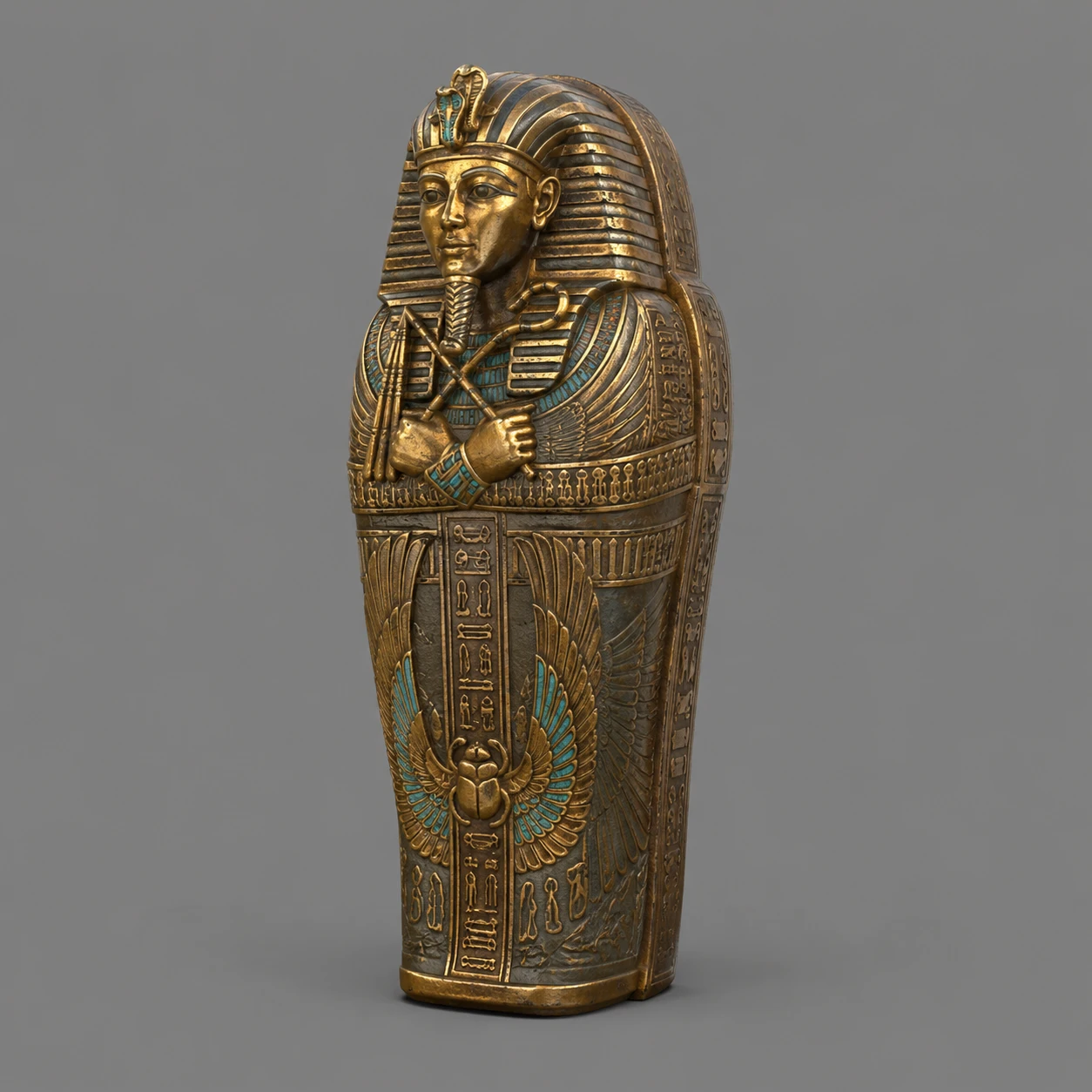
A single miniature sarcophagus on an offering table or at the foot of a full-size coffin suggests elite burial wealth without filling the chamber with dozens of boxes. Warm sidelight picks up carved face details on the lid. Our Egyptian Tomb Relics pack includes a miniature sarcophagus for tomb layouts and shrine alcoves.